Tinnitus
টিনিটাস

An estimated 10-30% of adult have tinnitus and the prevalance increases with age.
প্রাপ্ত বয়স্কদের মধ্যে আনুমানিক ১০-৩০% টিনিটাসে ভুগছেন এবং এই রোগের পাদুর্ভাব বয়সের সাথে বাড়ে.

Tinnitus may contribute to sleep disruption as well as cognitive and emotional problems.
টিনিটাস ঘুমে বিঘœ ঘটানের পাশাপাশি মানসিক এবং আবেগজনিত সমস্যাও সৃষ্টি করতে পারে

What Is Tinnitus ..?

Tinnitus is the perception of sound for which there is no identifiable sound source. The sound
May be perceived as ringing, buzzing, whistling or as a generally unpleasant sound.

টিনিটাস কি ?

টিনিটাস হল এমন একটি শব্দের অনুভ‚তি যার জন্যে কোন চিহ্নিত শব্দের উৎস নেই।
শব্দটি রিং রিং বাজানো, বাশি বাজানো বা অসস্তিকর শব্দ হিসাবে অনুভ‚ত হতে পারে।

Risk Factors

Hearing Loss is a well-established risk factor for tinnitus, affecting about 68% of individuals with tinnitus. Again and long term exposer to loud sound are other common risk factors for tinnitus.

Headphone Use

Studies have shown that frequent exposure to loud music, including through headphones, can caused auditory system damage that may lead to tinnitus.
What Causes Tinnitus?
The cause of primary tinnitus is not known, but is thought to be multifactorial, involving multiple physiologic and possibly genetic mechanisms.
4 Dysfunction of the cochlea (the inner ear structure responsible for turning vibrations into nerve signals), abnormal nerve signaling in the brain
auditory system, or a combination of the two play a key role in tinnitus onset and persistence.4,74 In addition, networks that connect the auditory
system with other brain regions may become involved. For example, activation of the limbic and paralimbic systems, which are responsible for
behavioral and emotional responses, are thought to contribute to distress signaling and complications of tinnitus, such as cognitive, mood, a
nd sleep disorders, in some individuals.

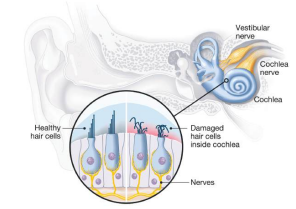
Damage to hair cells in the cochlea has been suggested to trigger the onset of tinnitus in many cases.
Hair cells detect movement in the environment and transform it into auditory and vestibular nerve
signals, and can be damaged by factors such as aging, noise trauma, and toxicity. It is thought
damaged hair cells release excessive amounts of glutamate, the main excitatory neurotransmitter,
causing dysfunctional nerve activation that can result in tinnitus. Simultaneous increased activation
of multiple auditory system nerve fibers is believed to be an important mechanisms underlying tinnitus.
Loss of nerve transmission inhibition, leading to increased excitability of nerve fibers involved in auditory
perception, may also play a role. Another possible contributing mechanism is maladaptive neuroplasticity,
in which neuronal pathways adapt and conform pathologically to changes in auditory system nerve signaling.
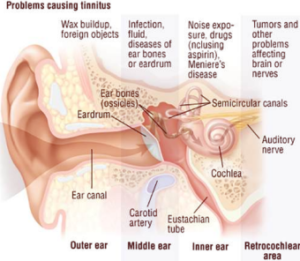
In secondary tinnitus, a known cause exists. Examples of causes of secondary tinnitus include
1. Vascular conditions that generate an internal perceivable sound
2. Musculoskeletal causes, such as head or neck injury or temporomandibular joint dysfunction
3. Use of ototoxic medications
4. Bacterial, viral, or fungal infections
5. Trauma to the auditory structure, such as the ear drum
6. Earwax impaction or improper earwax cleaning procedures
7. Metabolic disturbance, such as diabetes or imbalanced lipid levels
8. Neurological conditions, such as intracranial hypertension or vestibular migraine
9. Other problems affecting the outer and middle ear, such as cerumen impaction, tumors, fusing of the middle ear bones,
or dysfunction of the tympanic membrane or eustachian tubes
How is Tinnitus Treated?

Tinnitus has many possible causes and manifestations, and no single
treatment approach is effective in every case. Therapies targeting
associated conditions can sometimes reduce tinnitus’ negative impacts.
Non-invasive therapies that aim to mask or reduce perception of the
bothersome sound may further reduce or relieve persistent tinnitus.
In severe cases that do not respond to first-line approaches, external
therapies that modulate nerve function and more invasive treatments
such as medications, deep brain stimulation, and cochlear implants
may be considered.

Hearing Aids:-

Hearing aids can be beneficial in tinnitus patients with or without
hearing loss. Hearing aids increase the volume of ambient noise,
which may be helpful in masking tinnitus. improved hearing by
hearing aids may help reverse or normalize maladaptive brain
activity in tinnitus sufferers, as well as reduce stress and anxiety
by improving communication. Numerous studies have found hearing
aids have a positive effect on tinnitus perception in those with
hearing loss. in a clinical trial that included 91 chronic tinnitus
patients without hearing loss, approximately 90% reported reductions
in tinnitus loudness and annoyance after wearing hearing aids for three
months to one year.

Cognitive Behavioral Therapy:-

Cognitive behavioral therapy (CBT) is a form of psychotherapy that helps
individuals incorporate conscious thought patterns and behaviors that
reduce suffering and support health. CBT may be useful for improving
sleep, depressive symptoms, emotional tension, and worry, which may
reduce tinnitus, as well as increase effectiveness of other tinnitus
therapies. In fact of all tinnitus therapies, CBT has the strongest body
of evidence showing benefits.

Sound Therapy:-

Sound therapy involves the use of a generated sound to provide a
distraction and lower the intensity of tinnitus perception. It has also
been proposed to help by lowering stress and reversing maladaptive
changes in brain neuronal networks involved in perpetuating tinnitus.
Hearing aids or other devices can be used as sound generators, some
of which can be programmed to produce sounds in an individualized
fashion based on the pitch of the tinnitus.4 Although a number of
studies suggest sound therapy may be a useful part of tinnitus
treatment, the evidence so far is not conclusive

Tinnitus Retraining Therapy:-

Tinnitus retraining therapy combinestinnitus-specific counseling to develop the ability to view tinnitus as a neutral stimulus with sound therapy to decrease tinnitus-induced neuronal activation. A meta-analysis of 13 randomized controlled trials with a total of 1,345 participants found standard medical treatment plus tinnitus retraining therapy led to higher response rates after one, three, and six months, and reduced tinnitus-related disability more than medical treatment alone.166 However, many of the included studies were rated as lower-quality evidence. And a randomized controlled trial that included 151 subjects with tinnitus found no differences in outcomes after 18 months of treatment with tinnitus retraining therapy, tinnitus-specific counseling alone, or basic tinnitus care that involved providing educational information and guidance.

Frequently Asked Questions about Tinnitus ..?

What does tinnitus sound like?
Tinnitus is often described as “ringing” in the ears, but may also
be perceived as buzzing, whistling, hissing, rushing, crackling,
beeping, or simply an unpleasant sound.

Who treats tinnitus?
A primary healthcare provider can help determine whether your
tinnitus needs investigation and possibly treatment by an
audiologist or other specialist, but many people with tinnitus
manage their condition with self-help measures. A psychotherapist
or counselor may also be part of a tinnitus healthcare team.

How long does tinnitus last?
Depending on the cause, tinnitus may resolve quickly or persist
for months or years. Chronic tinnitus (lasting three months or
longer) usually does not go away, but many people become
habituated to their tinnitus, such that is becomes less bothersome
over time.

Does tinnitus cause hearing loss?
Hearing loss is the most common cause of tinnitus, and the two
conditions share certain risk factors and mechanisms. However,
while tinnitus may cause trouble hearing by obscuring sound,
tinnitus does not cause hearing loss.

Is tinnitus curable?
Chronic tinnitus is considered incurable, but most people with
chronic tinnitus improve a small amount over time.

Is tinnitus dangerous?
Tinnitus is not dangerous. However, it can be a symptom of a
dangerous or even life-threatening condition, such as stroke,
aneurysm, hemorrhage, or other cardiovascular emergency.
Warning signs that tinnitus might be due to a dangerous
underlying cause include a pulsating sound, a sudden onset,
affecting only one side, or occurring at the same time as other
neurological changes.

Why is tinnitus worse at night?
When tinnitus is worse at night, it may be due to surroundings
being quieter and less able to mask the tinnitus sound. Other
possible factors include changes in posture and muscle tension,
or circadian changes in stress hormone levels.

What does tinnitus do to your brain?
The brain adapts to tinnitus in various ways, depending on the
individual. In some cases, nerve networks between the auditory
system and other brain regions are altered by tinnitus, a process
that can lead to increased anxiety, depression, and stress.
Unfortunately, this is thought to reinforce tinnitus-related nerve
signaling and make it harder to recover from tinnitus.

Can you prevent tinnitus?
Protecting yourself from loud noise at work and in recreational
activities, not smoking, and maintaining good heart and general
health are ways to lower your risk of tinnitus